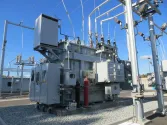
When power availability becomes a real estate constraint
By Shammi ThakurTwo sites may have similar characteristics, yet one can be useful if its grid connection is already understood and timed.
For data-centre developers in Singapore and Johor, the question is increasingly not where land is available, but whether the land can be powered on the timetable the project requires. Singapore has provisionally allocated 200MW of new data-centre capacity, whilst Johor has created a faster route to grid connection. Together, they point to a change in site selection: The development potential of a parcel increasingly depends on what can be connected to it.
A data-centre site can look attractive on conventional property measures: Size, zoning, road access, and proximity to fibre still fall short when the electrical connection is examined. If a project needs a new substation or transmission reinforcement, the problem is not simply an engineering upgrade. It can alter when construction starts, how long capital is tied up, and when a building can begin generating income.
For investors, the relevant question is therefore becoming less “Can we acquire this land?” and more “When can this land actually be energised?”
Singapore puts the constraint into focus
Singapore puts that distinction into sharp relief. In August 2026, the government provisionally allocated a combined 200MW of new capacity to four data-centre operators under its second Data Centre Call for Applications. The exercise was designed around a calibrated expansion model, with proposals assessed for strategic and economic contribution as well as sustainability. Singapore is also planning additional generation capacity for 2031 and 2032 as peak electricity demand is projected to rise from 8.2GW in 2025 to 11.9GW in 2032, with data centres amongst the energy-intensive sectors contributing to that growth.
For property owners and developers, the significance is not simply that Singapore is adding another 200MW. It is that new data-centre capacity is being allocated alongside decisions about the power system that supports it. In a market where land is already tightly constrained, electricity capacity becomes another development constraint. Two sites may have similar physical characteristics, yet one can be materially more useful if its grid connection is already understood and timed.
Johor turns connection time into a property factor
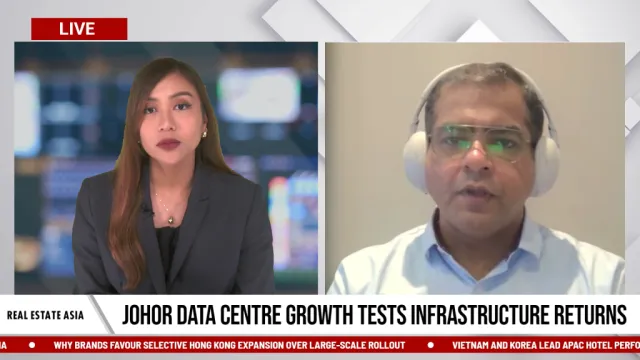
Johor is dealing with the same issue by attacking the connection timeline. Tenaga Nasional Berhad’s (TNB) Green Lane Pathway is intended to reduce the standard electricity connection period from 36 to 48 months to as little as 12 months, whilst its One-Stop Centre provides a dedicated channel for data-centre applications. TNB reported 49 data-centre projects in its system as of September 2025, representing around 7.1GW of maximum demand across different stages. It also said a 150MW Johor project used the Green Lane and One-Stop Centre process to streamline its electricity-supply application and delivery timeframe.
That is a property advantage, not just an electricity advantage. A shorter route to power can reduce the period for which a developer carries land and development costs before the asset becomes productive. It can also make the sequencing of financing, construction, fit-out, and customer commitments easier to manage. In other words, connection time can influence the investment case for a site before the first pile is driven.
Batam makes power part of the estate proposition
Batam shows a further step in this direction. In April, PLN Batam signed a 511 MVA electricity supply agreement with DayOne for phased data-centre development at Kabil Industrial Estate.
BP Batam highlighted the combination of land availability, reliable energy, and regulatory certainty when describing the project’s competitiveness. That is significant for industrial real estate because it changes what a large-scale estate can offer. The product is no longer simply a plot with roads and basic utilities. For a data-centre occupier, a credible route to large power loads can be part of the site’s practical value.
India brings the issue to scale
India brings the same issue to a much larger geographic market. Government data shows installed data-centre power capacity rising from about 375MW in 2020 to 1.57GW in August 2026, with nearly 8GW projected by 2030.
At a September 2026 industry roundtable, government and industry representatives discussed cluster-based transmission and substation planning, Day-1 sanctioned load and dual power feeders, alongside land and approvals. The detail matters. Once transmission and substation planning enters the same site-development conversation as land acquisition and approvals, power is no longer something developers can leave until the engineering stage.
Industry estimates put India’s modular data-centre market at US$1.19b ($1.306b) in 2025, rising to US$3.90b ($3.961b) by 2032, adding another indication of the scale of capacity that future site and power planning will need to accommodate. That could change how “development-ready” land is assessed across Asian data-centre corridors.
The due-diligence file may need to establish not only land title, zoning, and connectivity, but also available grid capacity, the required network works, the approvals that sit between the site and the grid, and the credibility of the energisation schedule. A site with a clear power pathway may therefore justify a different investment timetable from a similar parcel where the connection remains uncertain.
The effect is not that power replaces traditional real-estate fundamentals. It is that power is becoming one of them. Singapore’s capacity allocation, Johor’s effort to shorten connection times, Batam’s estate-level electricity commitment, and India’s push to plan transmission around future clusters all illustrate different ways in which the grid is moving closer to the property decision.
The next data-centre sites to attract capital may not simply be the ones with land in the right location. Increasingly, they will be the ones where the land and the electricity connection arrive as one credible development proposition.











 Read Here
 Advertise
 Sign Up