Singapore CBD Grade A office rents poised for strongest growth since 2022
Rents are expected to grow by over 5% in 2026.
CBRE expects Core CBD Grade A office rents to increase by more than 5% for the full year in 2026, which would represent the strongest annual rental performance since 2022, when growth reached 8.3%.
The consultancy said resilient occupier demand, shrinking secondary space availability and limited new supply before 2028 would continue to underpin rental growth.
Tighter leasing conditions are also supporting investment sentiment, with investors increasingly focused on rental growth prospects, improving occupancy and income resilience. Prime office assets remain among the most sought-after segments of Singapore's commercial property market.
Song said the market had evolved beyond a recovery story and was increasingly being defined by scarcity. With vacancy approaching frictional levels and little meaningful supply relief expected before 2028, she expects landlords to retain the negotiating advantage unless economic conditions deteriorate materially.
AI firms emerge as new driver of Singapore office leasing demand
Artificial intelligence companies are emerging as an increasingly significant source of office leasing demand in Singapore, adding a new dimension to an already competitive market where limited availability of quality space is strengthening landlords' pricing power, according to CBRE Research.
The consultancy said leasing demand remained broad-based in the third quarter of 2026, led by financial services occupiers across banking, wealth management, insurance, asset management and hedge funds. However, growing activity from AI companies is providing an additional source of demand across both flexible workspace and traditional office premises.
Notable examples include OpenAI's reported negotiations for approximately 120,000 sq ft at Shaw Tower, Anthropic establishing Singapore operations through The Executive Centre at Ocean Financial Centre, and Manus AI's reported commitment to space within Industrious' premises at Keppel South Central.
David McKellar, head of leasing at CBRE Singapore, said the AI ecosystem was generating demand across different stages of business growth, from start-ups taking flexible co-working space to established companies considering significant commitments in prime office buildings.
He added that the breadth of activity suggested AI was developing into a more durable source of office demand rather than a short-term trend.
The growing competition for quality premises is also translating into stronger rental performance. CBRE reported that Core CBD Grade A rents increased 2% quarter-on-quarter to S$12.75 per sq ft per month in Q3 2026, the strongest quarterly increase since Q3 2022.
Rental growth for the first nine months reached 3.7%, while vacancy declined to 2.6% from 3.3% in the previous quarter.
Tricia Song, head of research for Singapore and Southeast Asia at CBRE, said vacancy had fallen sharply from 7.8% in less than two years, following the completion of IOI Central Boulevard Towers, demonstrating how quickly occupiers had absorbed available supply.
With several prime buildings fully occupied or approaching full occupancy, Song said landlords were increasingly exercising pricing power, holding firm on lease renewals and seeking higher rents for new commitments.
Occupiers look beyond immediate leasing requirements
The limited availability of large, quality office premises is prompting occupiers to consider their future requirements earlier, with growing interest in developments scheduled for completion from 2028 onwards.
No major office completions were recorded in Q3 2026, and CBRE expects no new supply for the remainder of the year. Newport Tower in Tanjong Pagar is the only notable addition to the CBD pipeline in 2027.
Against this backdrop, One Comcentre, The Clifford and The Skywaters are attracting heightened occupier interest, with pre-commitment discussions for future space continuing to build.
McKellar said businesses requiring large floor plates had significantly fewer options than 12 months ago, prompting some to evaluate their requirements well ahead of lease expiry to secure suitable premises and maintain business continuity.







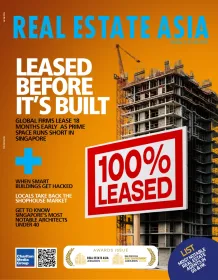
 Read Here
 Advertise
 Sign Up