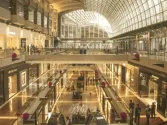
Jakarta retail supply hits 4.9m sqm
Greater Jakarta's retail growth shifts towards extensions and asset repositioning.
Greater Jakarta's retail property market is likely to see more selective new development, with mall extensions, asset repositioning and neighbourhood-focused retail formats gaining importance as land constraints and high development costs shape investment decisions, according to Colliers.
In its latest market report, Colliers said the retail supply outlook remained consistent with trends observed in the second quarter of 2026, with limited new development placing greater emphasis on the relevance and productivity of existing retail assets.
Jakarta has approximately 4.9 million sq m of retail space, while Greater Jakarta accounts for around 3.3 million sq m, according to the report. Given the substantial existing stock and limited opportunities for greenfield development in Jakarta, Colliers said investors are increasingly focused on identifying locations where additional retail space can generate sustainable demand.
The economics of new projects also vary across the region. In Jakarta, high land costs and the traditional reliance of large shopping malls on mixed-use or superblock developments make new projects more difficult to justify, particularly while office and residential components remain selective.
By contrast, stand-alone malls may remain viable in parts of Bodetabek, the areas surrounding Jakarta, where residential catchments, connectivity and purchasing power are expanding.
Colliers expects future retail supply to be geographically selective rather than uniformly constrained across Greater Jakarta, reflecting differences in local demand and development feasibility.
For existing malls, the consultancy said rejuvenation should be viewed as an ongoing requirement to maintain competitiveness rather than simply an alternative to new construction. Extensions can build on established customer traffic and operating infrastructure, while renovations, new retail concepts and changes to tenant mix can help older properties adapt to evolving consumer lifestyles.
Colliers concluded that the next phase of retail supply growth will depend less on the volume of new space delivered and more on how effectively capital is deployed across the right locations, retail formats and customer propositions.














 Read Here
 Advertise
 Sign Up