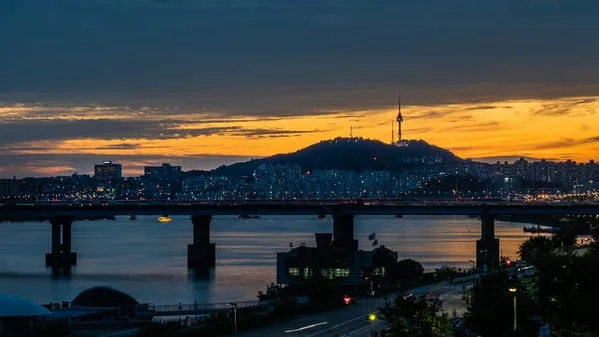
Greater Seoul data centre vacancy remains below 5%
Rents increased by a further 10% to 20% since the second half of 2025.
Korea's data centre market is seeing stronger demand from cloud service providers, technology companies and manufacturers as government AI initiatives and rising workloads support further growth, according to CBRE.
The government's "AI for All" strategy and related policy frameworks are stimulating data centre demand, particularly from cloud service providers and major technology and manufacturing companies, CBRE said in its 2026 Asia Pacific Data Centre Trends & Outlook.
Domestic occupiers accounted for close to 40% of total absorption in 2025, with CBRE expecting their share to increase this year. Demand from global cloud service providers is expected to remain stable, while rising AI workloads are contributing to overall growth.
Availability in Greater Seoul remains tight, with colocation vacancy below 5% and facilities with capacity above 2MW remain scarce. Intensifying competition has pushed rents up by a further 10% to 20% since the second half of 2025, with some pre-leasing agreements previously secured at fixed rents now subject to annual rent escalations during lease terms.
Power supply remains a key constraint. CBRE said developers are focusing on smaller, sub-10 MW data centres within Greater Seoul to navigate KEPCO's mandatory assessment process for larger projects. Projects outside Seoul that have secured large land parcels with sufficient power capacity have also attracted development interest.
Colocation providers are increasingly considering hybrid facilities that can support both legacy IT and AI workloads. CBRE said new developments are being designed for 10 kW to 20 kW per rack, with flexibility for incremental upgrades depending on tenant commitments and the requirements of higher-density rack users requiring liquid cooling.
Investment shifts beyond Seoul
Investment activity remains relatively limited because of a shortage of assets available for sale, although CBRE said this has resulted in modest cap rate compression.
Powered land sites in central Greater Seoul are scarce, while land prices are rising and suitable sites are tightly held. CBRE said investors are therefore exploring secondary cities, where developers continue to pursue pre-leasing opportunities.
The consultancy said Korea's government-led AI transformation, including GPU allocation through partnerships with Nvidia, is expected to support further data centre demand. Domestic cloud service providers are expected to accelerate GPU deployments, while government and cloud-based AI services could provide additional sources of demand.
CBRE also highlighted risks beyond power and land availability, including civil complaints and permitting constraints. The consultancy advised investors and developers to work proactively with local partners to manage community engagement, regulatory requirements and development timelines.
Global cloud providers and major Korean conglomerates are also looking beyond Seoul for large-scale data centre projects, according to CBRE.
Recent developments illustrate the shift. A Samsung SDS-led consortium has been selected to develop the National AI Computing Centre in Haenam, South Jeolla, which is designed to host around 15,000 advanced GPUs and is targeted for completion by 2028, CBRE said.
Hyundai Motor Group has signed a deal with the government to invest more than US$6 billion in an AI innovation hub within the Saemangeum development zone in North Jeolla. The project is expected to include data centres, a robotics manufacturing cluster and other AI-related facilities across three sites, leveraging robotics, AI, hydrogen, solar power and AI-driven smart city technologies.
Shinsegae is also looking to establish a joint venture with AI lab Reflection to develop a 250 MW sovereign AI data centre, with the project expected to require at least US$600 million of investment, according to CBRE.
As of the first quarter of 2026, Greater Seoul had 869 MW of total data centre capacity, with a further 1,412 MW of upcoming capacity, CBRE said. Its 2026 outlook calls for higher colocation prices, while vacancy is expected to remain broadly stable. The indicative cap rate range was 5.25% to 6.00%.


 Read Here
 Advertise
 Sign Up