Kuala Lumpur warehouse market shifts toward tenant choice
New Grade A supply is widening occupier options as logistics users prioritise compliance, automation, and lower operating costs.
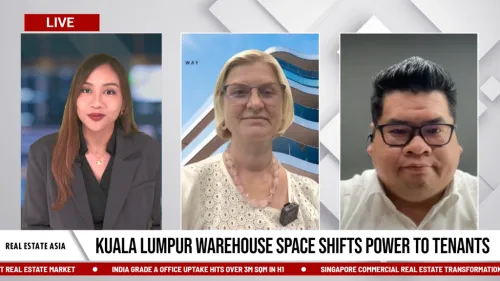
Kuala Lumpur’s logistics market is becoming more tenant-friendly as new Grade A warehouse supply gives occupiers greater choice and forces landlords to compete harder on specifications and lease terms.
Yulia Nikulicheva, Head of Research and Consultancy at JLL Malaysia, said the increase in supply reflects structural demand from sectors such as semiconductors and medical instruments, alongside stronger foreign investment and changing supply-chain requirements.
“We are moving towards a more balanced market rather than being an over-saturated market,” Nikulicheva said.
She added that developers are moving into larger and more sophisticated projects, including automated warehouses, as occupiers seek facilities better suited to modern logistics operations.
Kenny Lim, Vice President of Business Development at Ally Logistic Property, said tenants increasingly expect higher compliance standards and more automation-ready buildings, particularly in pharmaceuticals, manufacturing and third-party logistics.
“Pre-COVID, the market is segregated with a lot of Grade C and D type warehouses,” Lim said. “Post-COVID, the compliance is getting more and more strict.”
That shift is weakening demand for older stock that may not meet newer requirements around fire protection, ESG infrastructure and automation.
Tenant leverage is also showing up in lease negotiations. Lim said rent-free periods, once uncommon in Malaysia, have become more widespread, with some developers offering several months depending on location and vacancy pressure.
Location and building age remain critical. Nikulicheva said newer warehouses in established logistics hubs can retain stronger pricing power, whist older or less well-located assets need greater flexibility.
For Malaysian industrial landlords, the key divide is increasingly between modern logistics space that supports compliance and automation, and aging stock that may require upgrading, repositioning or more aggressive leasing terms.

















 Read Here
 Advertise
 Sign Up






Commentary
How commercial spaces must adapt to changing consumer expectations