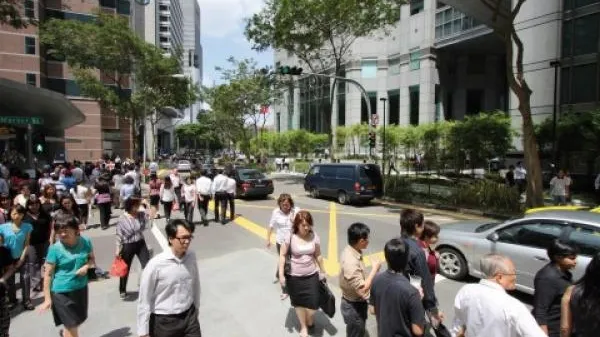
Singapore ranks highest in Asia in Savills global talent cities ranking
Talent-first strategies are reshaping global office demand.
London, New York and Singapore have been ranked the top three cities in Savills 2026 Global Talent Cities Index, underscoring the growing dominance of established global hubs in attracting capital, companies and skilled workers, according to Savills.
Singapore was also ranked the highest-performing city in Asia, reflecting its continued role as a key global command centre for multinational corporations. Savills said the results highlight how “talent-first” location strategies are reshaping corporate real estate demand and accelerating the evolution of global business hubs.
The Savills Talent Cities Index assesses leading global cities across five pillars: talent pool, liveability, competitive landscape, economic resilience, and cost efficiency, including salaries and real estate costs. Savills said cities at the top of the ranking continue to function as command hubs for capital and decision-making, supported by deep talent pools, strong venture capital ecosystems and high-quality office stock.
However, the consultancy noted that Singapore and other top-ranked global hubs face rising challenges, including high operating costs, intense competition for skilled professionals and increasing difficulties in talent retention.
Alan Cheong, Executive Director of Savills Research and Consultancy, said Singapore’s success is underpinned by its strong legal and business environment.
“Singapore’s strengths in protecting intellectual property and providing a safe environment for expatriates to live has attracted a critical mass of multinational companies to set up a regional base,” Cheong said. He added that this ecosystem has reinforced itself over time by attracting regional talent and supporting expansion across Asia.
Savills said the index also highlights a growing trade-off between talent depth and cost pressures. Cities with the deepest talent pools tend to be among the most expensive globally, intensifying competition for skilled labour and increasing retention challenges. In contrast, more liveable cities often benefit from stronger retention and employee satisfaction, despite having smaller talent pools.
Sarah Brooks, Associate Director in Savills World Research, said the traditional concentration of corporate activity in a small group of global cities is evolving into a broader network model.
“Major global cities remain crucial for senior decision makers, but they’re now part of wider office networks that support growth, provide access to talent and improve cost efficiency,” Brooks said. She added that this shift is driving demand for prime office space in top-ranked cities, while also increasing requirements for flexible and specialised workspace in emerging locations.
Michelle Needles, Global Head of Enterprise Solutions, Global Occupier Services at Savills, said companies are increasingly relocating to where talent is available rather than expecting workers to move.
She noted that competition for talent can become less efficient in oversaturated cities, leading to wage inflation and reduced flexibility for employers, with firms increasingly looking to diversify location strategies to maintain access to skills and reduce operational risk.


















 Read Here
 Advertise
 Sign Up