Designing the future of cities: A Conversation with SJ’s digital leadership
SJ’s digital ecosystem empowers clients to reduce rework, optimise energy, and strengthen asset performance.
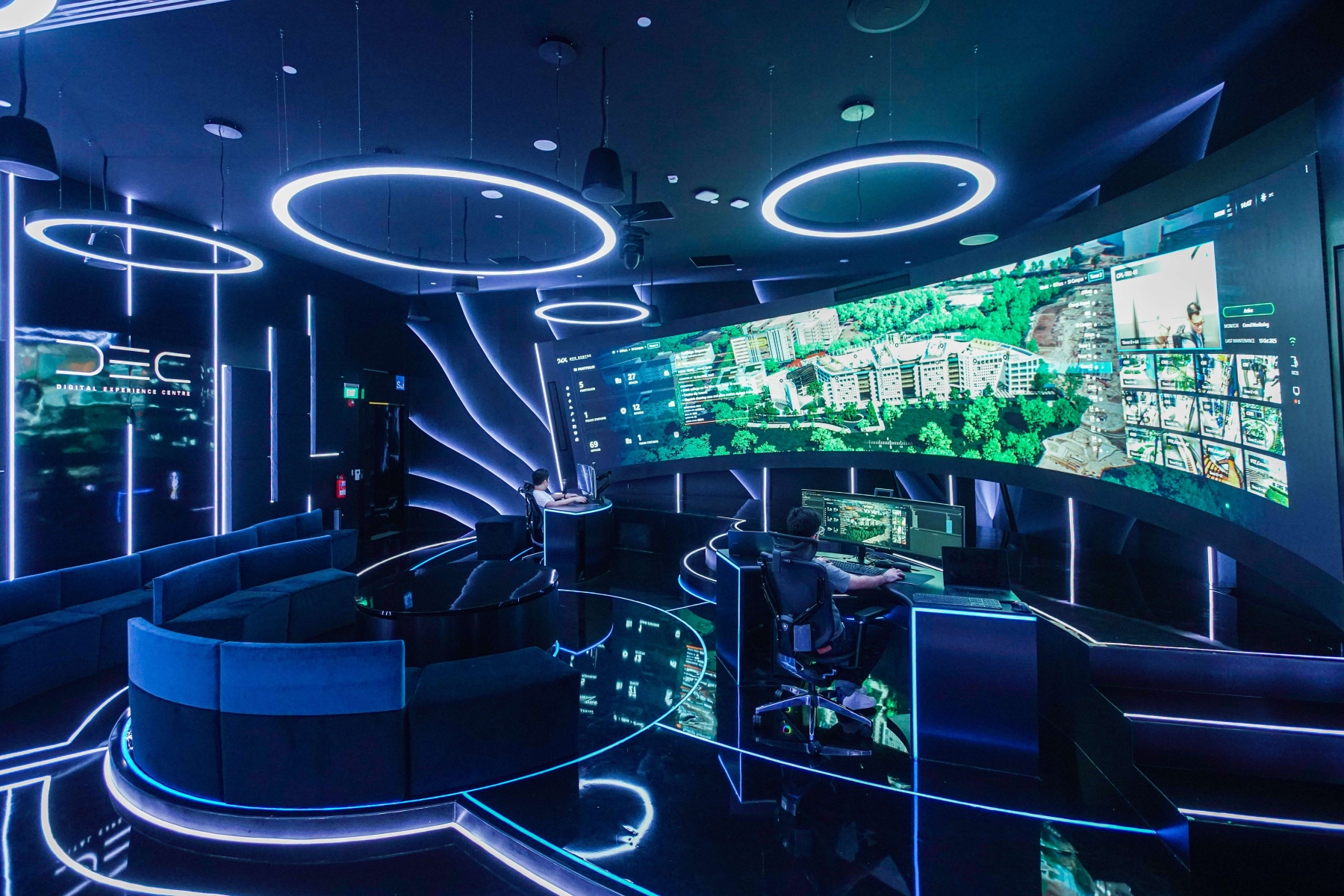
As cities evolve to become smarter, greener, and more efficient, SJ Group (SJ) is redefining how digital intelligence is shaping the built environment. Behind this transformation is SJ’s Digital Leadership team, led by Teo Say Leng. Say Leng, executive director, digital technology oversees a team of data scientists and app developers to integrate the suite of operational tech solutions offered by the global design, engineering, and managed services firm to drive higher returns on their asset owner clients’ investments.
The SJ Digital Experience Centre (SJDEC) is designed to help asset owner and investor clients reduce abortive rework, optimise energy use, and improve lifecycle performance. In essence, clients are able to visualise and evaluate the capital cost of designing and engineering cities, precincts, and towns before they commit to invest.
In this conversation with Real Estate Asia, Teo shares how SJ is advancing digital excellence to support the future of regenerative, high-performing urban systems.
What is SJ’s vision for the SJ Digital Experience Centre (SJDEC), and how does it reflect SJ’s commitment to AI-optimised, digital-first solutions?
The SJDEC is a response to the industry’s push for Integrated Digital Delivery (IDD). Clients can see, in a measurable way, how AI, digital twins, and predictive analytics control financial and operational outcomes. The space, both physical and accessible virtually, facilitates collaboration amongst the ecosystem, uniting architects, engineers, contractors, operations teams, and sustainability consultants and the owners in a project to model cost, carbon, and performance trade-offs early through digital replicas of the projects they envision to draw up multiple scenarios at every stage of the development from procurement, to land-use planning, material sourcing, through manufacturing & assembly, handover through to maintenance, and operations.
Asset owners experience how IDD reduces risk and improves ROI (returns on investment) across the lifecycle. Digital twins and immersive simulations reveal design clashes and maintainability issues early, preventing abortive works. Such abortive works are mostly hidden and unseen, but are a huge liability in managing construction costs.
During construction, integrated platforms connect architects, engineers, and contractors in real time, helping teams resolve issues quickly and protect project budgets. As assets transition into operations, these same digital models become powerful engines for optimising energy, maintenance, and manpower. The result is an asset that performs better, costs less to run, and delivers stronger long-term value.
How do digital twins reduce abortive work and strengthen asset lifecycle outcomes?
Digital twins allow us to test design and operational scenarios before construction, giving our designers, engineers, and project managers the opportunity to address risks early. By visualising clashes, access constraints, and system behaviour upfront, we are helping owners avoid costly, late-stage corrections. In operations digital twins use real-time data to support predictive maintenance, reduce downtime, and improve performance.
SJ implemented a 3D digital twin on a Singapore educational campus earlier this year to allow operators to visualise and respond to incidents with precision, resulting in a 45-57 per cent improvement in fault response times and a 50 per cent reduction in emergency dispatch times.
How does SJ’s smart facilities management (FM) approach enhance portfolio management and long-term value?
Our smart FM systems integrate real-time data, IoT (Internet of Things), and AI to give owners certainty and confidence in evaluating how their assets are performing across the portfolio. AI-driven workflows help frontline teams resolve issues quickly and consistently, improving service delivery and user experience. Predictive analytics optimise maintenance cycles and with early detection of faults, operating expenses come down over time, extending the lifespan of key equipment. When scaled across mega infrastructure assets, including airports, ports, and energy-sapping data centres, the efficiencies have a multiplier effect. This data-driven approach ensures that operational improvements translate into long-term commercial returns.















 Read Here
 Advertise
 Sign Up