Singapore CBD Grade A office vacancy falls to 6.7% in Q4
Flight-to-quality drives sustained decline in premium office vacancies.
Vacancy rates in the CBD Grade A office market continued to improve in Q4/2025, underpinned by sustained occupier demand and an ongoing flight to quality, according to data compiled by Savills.
Savills reported that the overall vacancy rate for CBD Grade A offices eased to 6.7% in Q4/2025, down 0.3 percentage points quarter-on-quarter after holding at 7.0% for the previous two quarters. On a full-year basis, vacancy declined by 1.3 percentage points, reversing the 1.5 percentage point increase recorded in 2024.
Within the segment, Savills highlighted a clear divergence in performance by building grade. Vacancy rates for Grade AAA and Grade A offices fell by 1.0 and 1.1 percentage points, to 6.3% and 4.8% respectively, while Grade AA vacancy rose by 1.5 percentage points to 9.1%, its highest level since Q4/2017.
According to Savills, the elevated vacancy in the Grade AA segment is largely attributable to Keppel South Central, which is still in the process of being leased following its addition to stock.
Flight-to-quality drives premium occupancy
Savills noted that vacancy in premium Grade AAA offices has now declined for four consecutive quarters, as occupiers continue to capitalise on flight-to-quality opportunities at lease expiry. The firm added that the limited pipeline of new, especially higher-quality office developments has further supported occupancy in this segment.
Grade A offices have also recorded five consecutive quarters of falling vacancy, which Savills attributed in part to relocations by cost-conscious tenants seeking better value within newer or better-quality buildings.
As a result, net demand across the overall CBD Grade A office market remained positive for the fifth straight quarter, although it moderated to 88,000 sq ft in Q4/2025, compared with 525,000 sq ft in Q3/2025.
Savills said this brought total net take-up for 2025 to nearly 941,000 sq ft, marking the highest annual level since 2019, when net demand reached approximately 1.0 million sq ft.
Marina Bay and Raffles Place outperform
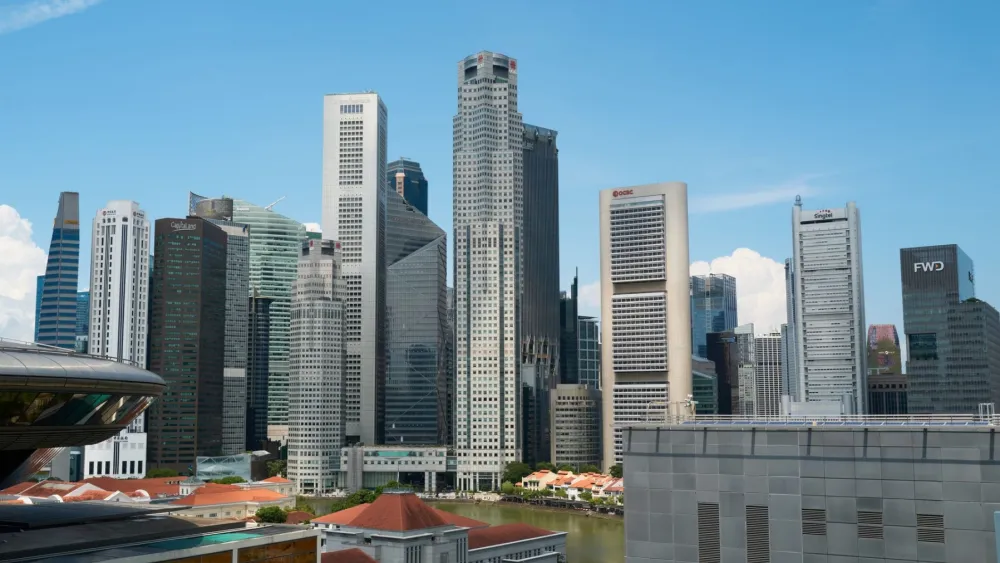
At the micro-market level, Savills observed that Grade A office vacancies rose in most CBD locations, except for Marina Bay and Raffles Place, where vacancy declined by more than 1.0 percentage point each.
Given that most Grade AAA stock is concentrated in these two precincts, Savills reported that vacancies in Marina Bay and Raffles Place fell by 1.2 and 1.1 percentage points, to 8.4% and 4.2% respectively, in Q4/2025.
For Raffles Place, this marked the fifth consecutive quarterly decline and the lowest vacancy rate since Q1/2020, when it stood at 3.9%. Marina Bay also recorded its fourth straight quarter of vacancy contraction, underscoring the strength of demand for premium office space, according to Savills.
In other CBD micro-markets, vacancies increased by between 0.2 and 2.7 percentage points quarter-on-quarter. Savills highlighted the Beach Road/Middle Road area as recording the steepest rise, with vacancy climbing 2.7 percentage points, from 4.2% in Q3/2025 to 6.9% in Q4/2025, following three quarters of decline. This was mainly due to higher vacancies at Duo Tower, Gateway East and Gateway West.
Year-on-year improvement across most areas
On a year-on-year basis, Savills reported that most CBD micro-markets recorded lower vacancies in Q4/2025, with declines ranging from 1.3 to 3.9 percentage points.
Raffles Place posted the largest annual improvement, with vacancy falling 3.9 percentage points, from 8.1% in Q4/2024. In contrast, Orchard Road and Tanjong Pagar were the only micro-markets to record year-on-year increases.
Vacancy along Orchard Road edged up by 0.4 percentage points, while Tanjong Pagar saw a sharp increase of 15.3 percentage points, largely reflecting the addition of Keppel South Central to stock in Q3/2025. Savills noted that excluding Keppel South Central, the year-on-year change in Tanjong Pagar’s vacancy rate would have been minimal.
Overall, Savills said the data points to a market that is steadily absorbing space, with demand increasingly concentrated in higher-quality assets amid limited new supply.














 Read Here
 Advertise
 Sign Up