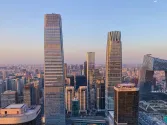
Supply-demand imbalance looms for Taipei’s office market in Q4
Over 17,000 ping is expected to enter the market.
Looking ahead to Q4 2025, JLL said in a report that Taipei’s office property market faces potential supply-demand imbalance as 17,300 ping enters the market. Despite Q3 2025’s 40% growth, supply influx creates oversupply over next quarters. Absorption capacity tested as supply outpaces demand, intensifying competition.
“Consequently, this oversupply will deepen market bifurcation, with premium certified buildings sustaining rate momentum while aging stock encounters escalating pricing pressure and extended lease-up periods,” the report said.
Here’s more from JLL:
Overall Grade A office transactions in Taipei surged to 9,800 ping (about 32,000 sqm) in Q3 2025, marking a robust 40% quarter-over-quarter increase as economic uncertainties gradually lifted and tenant confidence in relocation decisions strengthened.
Leasing activity focused on newly supplied buildings (less than 3 years) such as Fubon A25, Kindom Mingchang, and Ruentex Yucheng, with about 60% of transactions in prime properties, highlighting corporate demand for premium spaces.
Two of new completions totaling about 37,300 sqm (11,300 ping) pushed CBD vacancy rates up by 80 basis point.
Taipei CBD welcomed new supply again in Q3 2025, with the vacancy rate increasing by only 0.7%, including developments such as Shin Kong Hangzhou North and Yuanta Silver Star buildings (total 11,300 ping), demonstrating the market’s strong absorption capacity.
However, approximately 17,300 ping of new supply is expected to enter the market in the final quarter of 2025, particularly concentrated in the Others and Dunhua North submarkets, which is anticipated to further elevate CBD vacancy rates.
LEED/WELL certified buildings drive rent growth as tenants prioritize ESG-compliant workspace
Taipei CBD rental rates hit TWD 3,221 per ping per month (GFA), with rental growth rates converging to 0.53% year-over-year and experiencing moderate growth of 0.14% quarter-over-quarter.
Despite market headwinds, this performance was primarily driven by continued absorption of premium office buildings and new supply developments, many of which feature sustainability certifications such as LEED or WELL.


 Read Here
 Advertise
 Sign Up