Southeast Asia real estate investment set to hit US$21.8b on safe haven demand
This represents a 16% increase from 2024.
Southeast Asia’s real estate investment market is rebounding, with transaction volumes projected to reach US$21.8 billion in 2025, up nearly 16% year-on-year, according to Cushman & Wakefield.
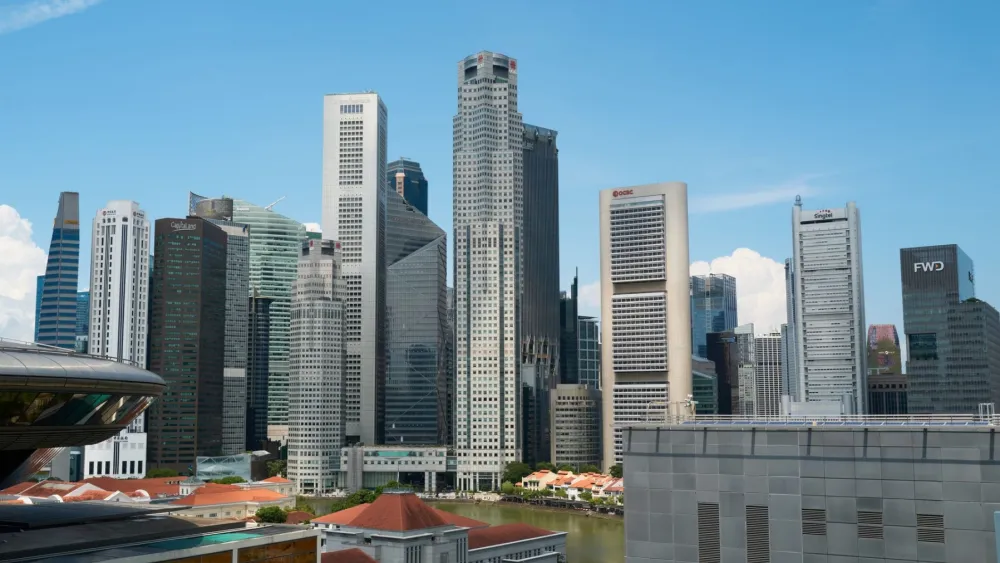
The firm said Singapore continues to dominate regional activity, accounting for around 61% of total investment volumes, supported by declining borrowing costs and stable property fundamentals. Investment activity in the city-state remained broad-based across office, retail, industrial and hospitality sectors.
Cushman & Wakefield highlighted several major transactions, including the acquisition of Clementi Mall by Elegant Group for approximately US$624.6 million. Keppel REIT also acquired a one-third stake in Marina Bay Financial Centre Tower 3 from Hongkong Land for about US$1.1 billion.
In addition, CapitaLand Integrated Commercial Trust purchased a 55% interest in the commercial component of CapitaSpring for roughly US$810 million, while a joint venture between UOL Group, Singapore Land Group and CapitaLand completed the Thomson View en bloc acquisition for around US$637.4 million.
Beyond Singapore, Cushman & Wakefield noted that industrial and data centre assets are reshaping the investment landscape across emerging Southeast Asia. In Manila, Equinix acquired three data centres from Total Information Management in June 2025.
Meanwhile, Vantage Data Centers secured a US$1.6 billion equity investment led by GIC and a subsidiary of Abu Dhabi Investment Authority. Part of the capital was used to acquire Sedenak Tech Park, a hyperscale data centre campus from Yondr Group.
Cushman & Wakefield said investors are increasingly targeting sectors with long-term structural demand, particularly industrial and digital infrastructure, as manufacturing growth, urbanisation and digitalisation accelerate across the region.
However, the firm cautioned that investment strategies are being shaped by a range of risks, including geopolitical tensions, inflation, currency volatility and domestic political factors. Climate risk is also becoming a more significant consideration, with extreme weather events prompting greater focus on resilience and site selection.
Overall, Cushman & Wakefield said capital is continuing to favour markets with strong fundamentals and stability, reinforcing Southeast Asia’s appeal as a relative safe haven for real estate investment.













 Read Here
 Advertise
 Sign Up